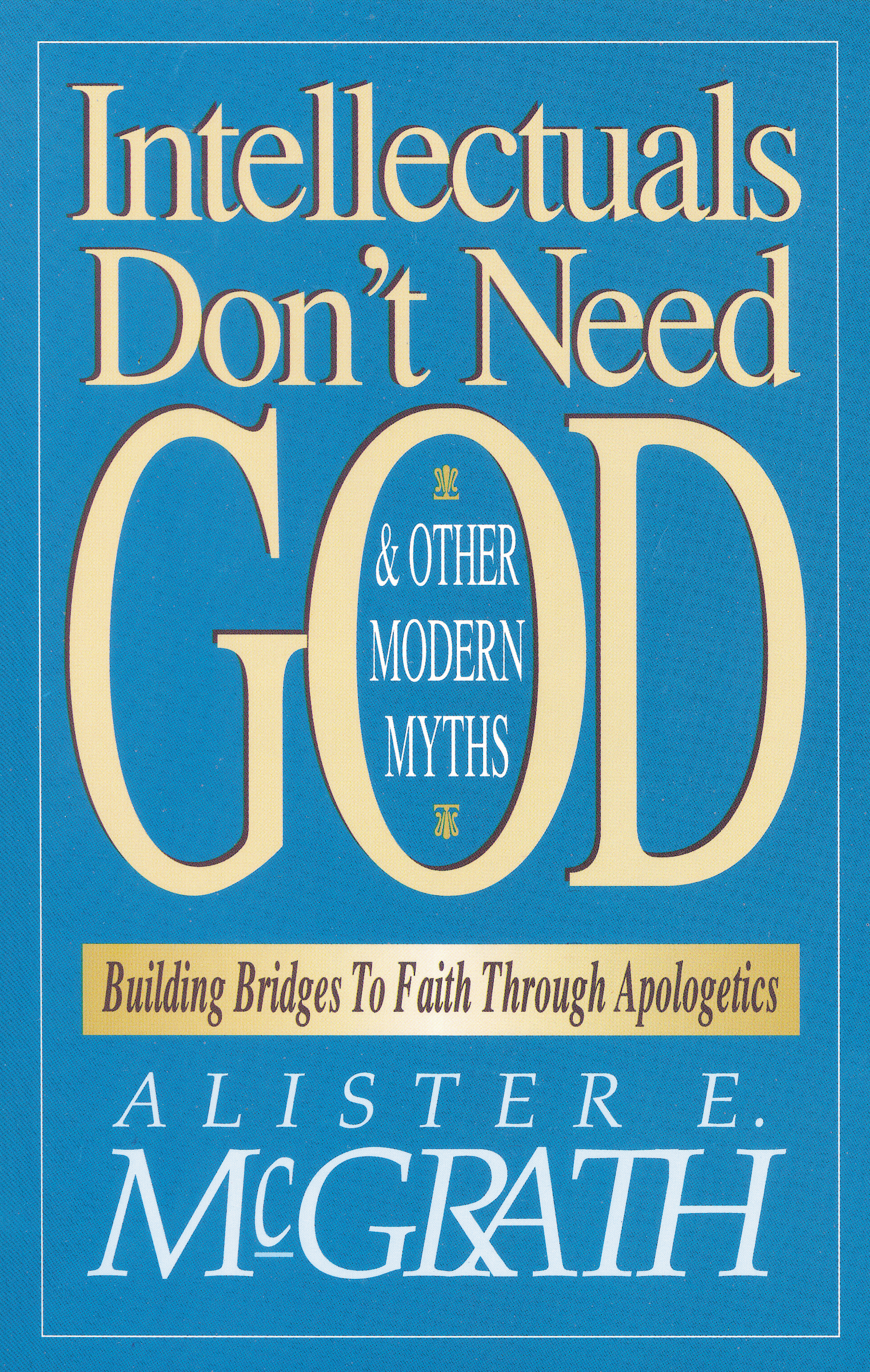
Intellectuals Don't Need God and Other Modern Myths

Description
Rethinking Effective Apologetics for the Present Age.
Christians have always had to defend their faith against all kinds of criticism and misunderstandings, but these attacks change overtime, and the strongest arguments of the famous classical apologists who preceded us are not necessarily the strongest today.
Intellectuals Don't Need God is written to today's faithful apologists who are trying to commend Christianity in terms of its relevance to everyday life and not just its inherent rationality. Its focuses are:
- Understanding and overcoming the barriers of faith in today's culture.
- Presenting the points of contact between daily life and spiritual longing.
- Demonstrating the apologetics of today in action.
Theologian and scientist, Dr. Alister McGrath (author of the ECPA 2014 Christian Book Award Winning biography of C. S. Lewis) shows convincingly that appeal to reason is only one of many possible bridges between the non-Christian and the gospel. In today's world, cerebral and emotional concerns—such as a sense that life lacks purpose or a deep sense of longing for something unknown—are often more effective starting points for modern apologetics.
Dr. McGrath combines the clarity of a brilliant scientific mind with a deep commitment to Christ and to reaching non-Christians. Intellectuals Don't Need God is for apologists and seekers alike—for both those defending and questioning the validity and value of Christianity.
About the Author
Alister McGrath discovered Christianity while an undergraduate at Oxford University, and he's spent the rest of his life exploring its rich themes and their wider impact. After gaining first-class honors in chemistry at Oxford, McGrath earned his first doctorate in biomedical sciences and two others in theology and intellectual history. He began his teaching career at Oxford in 1983, when he was appointed lecturer in Christian doctrine at Wycliffe Hall. He now serves as senior research fellow at the Ian Ramsey Centre for Science and Religion at Oxford University and lives with his family near Oxford.