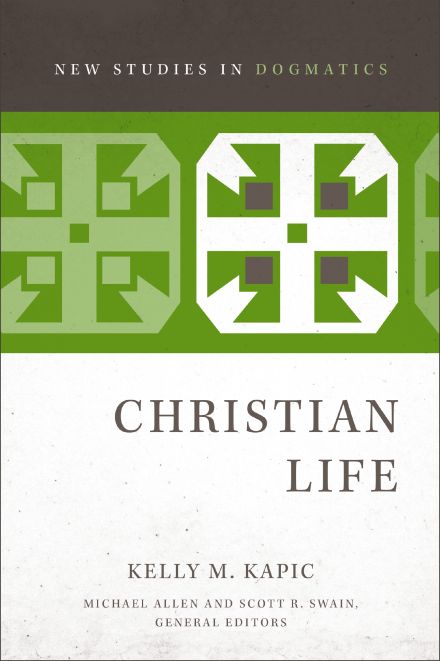
Kelly M. Kapic discusses Christian Life

KELLY M. KAPIC (PhD, King’s College, University of London) is Professor of Theological Studies at Covenant College. He is the author of numerous books, including You’re Only Human: How Your Limits Reflect God’s Design and Why That’s Good News, Embodied Hope: A Theological Meditation on Pain and Suffering, and A Little Book for New Theologians, and the co-author of Becoming Whole: Why the Opposite of Poverty is Not the American Dream and The God Who Gives: How the Trinity Shapes the Christian Story.
ZA: Given your topic of Christian life, we might expect your book to be mainly about the things that we do as Christians (for example, prayer, reading Scripture, and worship). We do encounter those things, but you foreground God’s action. How do you envision the relationship between divine and human action?
Kelly M. Kapic: Yes, it might surprise some, but my working thesis for the book is fairly simple: Christian life is a response to the love of God. It seems good and right to begin with the God of life before we make claims about ourselves. And then I believe we should frame our response in a Christological manner. As a fuller dogmatic claim, which then structures the entire book, I argue: A theology of Christian life is framed in terms of divine and human agency. Not only did the triune God first love us, but the incarnate Son also first loved God for us. We respond to God’s love as those who have been united to Christ by the Spirit.
ZA: Your book also features an intentionally Trinitarian structure in part two. For some Christians, that might seem like an abstract doctrine that doesn’t directly apply to our lives. How do you see the Trinity shaping the Christian life?
Kelly M. Kapic: All of the practicalities of Christian life are responses to the life and love of God. Flowing from God’s triune inner life, this love constitutes God’s working plan for shalom and his response to the problems that sin introduces. God’s love draws us into communion with him and enables us to love our neighbors and the rest of creation. We receive God’s love and enter his kingdom not by our natural standing or faithfulness but by Christ working in and for us. The incarnate Son is not only God, worthy of worship, but also our Priest, King, and Prophet who leads our worship. We must actively see Christ as central to our lives. We enjoy life, love, and fellowship with God by the Holy Spirit, who is the bond of love between the Father and Son and thus the bond of love connecting us to God in Christ.
ZA: What did you learn about your own life as a Christian in the course of writing this book?
Kelly M. Kapic: So many things! Writing this volume, I kept being struck by the goodness of the gospel: this is about God’s love and grace from first to last. I noticed, for example, that subtle but consistent forms of moralism could undermine my experience of Christian life. I needed to return again and again to the beauty, goodness, and truth of our God; otherwise, I would lose the plotline. In particular, I was captured by the idea that Christ first loved God for us. This meant God didn’t need me to always have perfect motives, undistracted worship, or unblemished obedience. Christian life is fundamentally about Jesus’ story and my connection to him by his Spirit. We need this larger vision to make sense of how things like grace and gratitude, love and law, struggle and confidence all fit together.
ZA: What is your hope for those who read this book?
Kelly M. Kapic: Worship! Honestly, my hope and prayer is that it will provoke readers to worship. We speak so much of the gospel, we use so many clichés, and we do religion, but do we worship? My great hope is this imperfect book can encourage both individual and corporate worship of God.
Thank you! Sign up complete.