Description
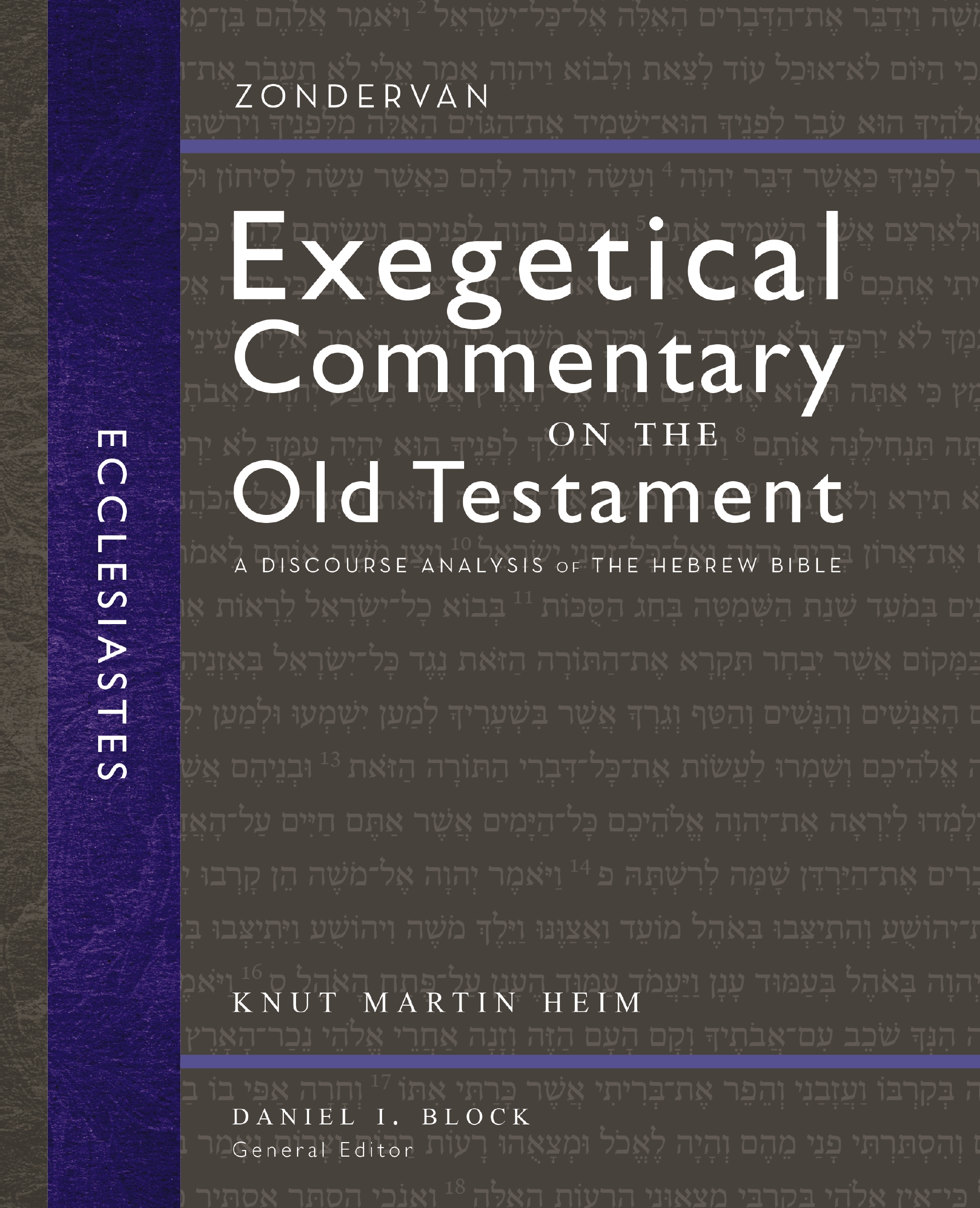
Designed for the pastor and Bible teacher, the Zondervan Exegetical Commentary on the Old Testament features today's top Old Testament scholars and brings together commentary features rarely gathered together in one volume. With careful discourse analysis and interpretation of the Hebrew text, the authors trace the flow of argument in each Old Testament book, showing that how a biblical author says something is just as important as what they say.
Commentary on each passage follows a clear structure to help readers grasp the flow and meaning of the text:
- The Main Idea of the Passage: A one- or two-sentence summary of the key ideas the biblical author seeks to communicate.
- Literary Context: A brief discussion of the relationship of the specific text to the book as a whole and to its place within the broader argument.
- Translation and Exegetical Outline: Commentators provide their own translations of each text, formatted to highlight its discourse structure and accompanied by a coherent outline that reflects the flow and argument of the text.
- Structure and Literary Form: An overview of the literary structure and rhetorical style adopted by the biblical author, highlighting how these features contribute to the communication of the main idea of the passage.
- Explanation of the Text: A detailed commentary on the passage, paying particular attention to how the biblical authors select and arrange their materials and how they work with words, phrases, and syntax to communicate their messages.
- Canonical and Practical Significance: The commentary on each unit will conclude by building bridges between the world of the biblical author and other biblical authors and with reflections on the contribution made by this unit to the development of broader issues in biblical theology--particularly on how later Old Testament and New Testament authors have adapted and reused the motifs in question. The discussion also includes brief reflections on the significance of the message of the passage for readers today.?
The Zondervan Exegetical Commentary on the Old Testament series is the go-to resource for pastors and Bible teachers looking for deep but accessible study that equips them to connect the needs of Christians today with the biblical text.
Table of Contents
Part I Ecclesiastes 1:1–11
1. Ecclesiastes 1:1–3
2. Ecclesiastes 1:4–11
Part II Ecclesiastes 1:12–12:7
Part II.1 Ecclesiastes 1:12–4:12
3. Ecclesiastes 1:12–2:26
4. Ecclesiastes 3:1–15
5. Ecclesiastes 3:16–22
6. Ecclesiastes 4:1–6
7. Ecclesiastes 4:7–12
Part II.2 Ecclesiastes 4:13–5:11[12]
8. Ecclesiastes 4:13–16
9. Ecclesiastes 4:17–5:6[5:1–7]
10. Ecclesiastes 5:7–11[8–12]
Part II.3 Ecclesiastes 5:12[13]–6:12
11. Ecclesiastes 5:12–19[13–20]
12. Ecclesiastes 6:1–12
Part II.4 Ecclesiastes 7:1–9:12
13. Ecclesiastes 7:1–8:1
14. Ecclesiastes 8:2–9:12
Part II.5 Ecclesiastes 9:13–10:20
15. Ecclesiastes 9:13–10:15
16. Ecclesiastes 10:16–20
Part II.6 Ecclesiastes 11:1–12:7
17. Ecclesiastes 11:1–6
18. Ecclesiastes 11:7–12:7
Part III Ecclesiastes 12:8
19. Ecclesiastes 12:8
Part IV Ecclesiastes 12:9–14
20. Ecclesiastes 12:9–14
Ecclesiastes: The Fear of God and Obedience to His Commands as a Roadmap to Happiness
Ecclesiastes offers a complex message about life’s meaning and the pursuit of happiness. While the surface-level debate on human existence is intriguing, the underlying message is a call to cultural resistance against foreign rule. Qoheleth’s message offers a viable alternative to the allure of material possessions and complicity with foreign occupiers by promoting a theology of true happiness within the religious framework of traditional Jewish faith and cultural values. His nuanced approach, combining overt compliance with covert defiance, fosters resilience and resistance against foreign occupation. Presented with humor and wit, Ecclesiastes serves as a paradigm for faithful resistance and a source of hope and inspiration for the community of faith.
Praise for Ecclesiastes
“The brilliance of Heim’s work is his ability to move from the general and philosophical tenor of Ecclesiastes to the specific contextual factors that make the author a prophetic voice. . . with wit, wisdom, and wile. “
—GEORGE ATHAS, Director of Research, Moore Theological College
“Heim tackles Ecclesiastes with characteristic panache, seeing Qoheleth is a skillful public orator, delivering a comedic oral “routine” to an audience and generating happiness and fear of God.”
—KATHARINE DELL, Professor of Old Testament Literature and Theology, Faculty of Divinity, Cambridge University
“Heim reads Ecclesiastes as a subversive political work with Qoheleth presenting an alternative to Hellenistic culture. . . shedding new light on this ancient and often enigmatic book.”
—THOMAS KRÜGER, Professor Emeritus of Hebrew Bible, Universität Zürich, Theologisches Seminar
“Using his considerable expertise in rhetorical and imaginative exegesis, Heim has made Ecclesiastes accessible and understandable. . .refusing to gloss over the book’s Hebrew wit and wisdom.”
—BRUCE C. BIRCH, Dean Emeritus and Professor Emeritus of Biblical Theology, Wesley Theological Seminary
“Heim’s Ecclesiastes offers a groundbreaking discourse-linguistic analysis that reframes Qoheleth as a subversive orator operating under imperial surveillance—a poetic prophet and orator, wielding humor and ambiguity as weapons of resistance.”
—TOVA FORTI, Professor of Biblical Studies, Ben-Gurion University of the Negev
“Heim delivers a fresh, vivid translation that brings out Ecclesiastes’s rhetorical artistry and theological depth, helping readers hear God’s Word afresh and discover the wisdom and joy in fearing God.”
—JEFFREY R. OETTER, Adjunct Faculty, Old Testament, Denver Seminary
The striking strength of this book is the way the author preserves the text’s ambiguity and rhetorical uniqueness, paying attention not only to what Qoheleth says, but to how he says it.
—RIAD KASSIS, International Director, Langham Partnership International
“Knut Heim strikes out with bold originality towards a view of Ecclesiastes as comically-nuanced political satire—a hidden transcript defending the faith against Ptolemaic-era assimilation.”
—RICHARD S. BRIGGS, Principal, Lindisfarne College of Theology
"Heim’s discourse analysis skillfully and patiently navigates tensions in the biblical text. . . the resulting insights have substantial explanatory power that enable readers to negotiate the space between Qoheleth’s positive message and its more skeptical outlook, paving a path to exist in tension without forced resolutions."
—CAMI BRUBAKER, Assistant Professor of Old Testament and Hebrew, Bethel University
"Anyone seeking greater insight into the theology of this biblical thinker will appreciate Heim’s commentary on Ecclesiastes. It offers a comprehensive, in-depth, and readable guide to a biblical book that has been debated for decades."
—BERND U. SCHIPPER, Professor of Hebrew Bible, Humboldt-University of Berlin